Monday, February 22, 2021

We Need to Support SB1108 for Our Fire District

We need to support our fire district and help get this small increase in property tax to pass.

We need to support SB1108 so PLEASE  Call Senator Sonny Borrelli at 602-926-5051or Email him HERE

This money could provide money for an additional firefighter in Meadview and training volunteers. You never think about fire protection or EMS until you need to call 911. It's time to think ahead and help pass SB1108.

Senate Bill 1108 State of Arizona Senate Fifty-fifth Legislature First Regular Session 2021  

F. The board, based on the budget submitted by the district, shall 13 levy, in addition to any tax levied as provided in section 48-806, a tax 14 not to exceed $3.25 per $100 of assessed valuation THROUGH TAX YEAR 2021, 15 $3.375 PER $100 OF ASSESSED VALUATION FOR TAX YEAR 2022 AND $3.50 PER $100 16 OF ASSESSED VALUATION FOR TAX YEAR 2023 AND EACH TAX YEAR THEREAFTER, or 17 the amount of the levy in the preceding tax year multiplied by 1.08, 18 whichever levy is less, and minus any amounts required to reduce the levy 19 pursuant to subsection I of this section, against all property situated 20 within the district boundaries and appearing on the last assessment roll. 21 The levy shall be made and the taxes collected in the manner, at the time 22 and by the officers provided by law for the collection of general county 23 taxes. 

Friday, February 19, 2021

Thanks to Chief Bonnee the LMRFD Will Have Better Response Times Starting Tonight...

 Starting the evening of Friday February19th thanks to Chief Bonnee the LMRFD will have improved response times because of new accurate GPS data called a shapefile.

In addition to pagers the fire district uses an app called Active911 to provide basic call information as well as a map to route firefighters from their location to the call using GPS.

If you use GPS on your phone then more than likely it's using Google Maps. Around Dolan Springs and Meadview if you use GPS you know that where your GPS says an address is, and where an address really is, can be two different locations. 

Active911 uses Google Map addresses for routing unless other GIS mapping data called a shapefile is provided. That's what Chief Bonnee did. He provided the Mohave County GIS shapefile for the LMRFD to Active911 for their WIZ mapping system.

BUT then it got better... Active911's Jennifer Davis and Mohave County GIS Coordinator Steve Engle went above and beyond. Working together they provided the shapefile for not only the fire district, but also for the LMRFD CON to Active911. The CON is the 2000 or so square miles the LMRFD ambulance covers. 

Now when our firefighters respond on fire calls or EMS calls, the address they see on their Active911 map is from the Mohave County GIS map and not a really good guess from Google Maps. 

This accurate mapping information will improve response times across the entire area not just the fire district. 

Understanding Active911's WIZ Mapping System


Wednesday, February 10, 2021

Alaska's Alternative for EMS Response in Rural Areas Like Dolan Springs

Everybody knows to call 911 in an emergency. But 911 works a little different in some areas, especially in rural areas.

A friend who lived in Alaska and understands responding in rural areas told me how their EMS dispatch system worked in rural areas similar to ours.

In Alaska the person would call 911 as usual. The 911 operator would take the information, page the appropriate unit and pass on the call information. That's where things change. 

The 911 dispatcher would forward the call to a mobile phone mounted in the ambulance. This allowed the EMT to speak directly to the caller getting directions and updated medical information. This eliminated any miscommunication between the caller, 911 dispatch, and the responding EMS unit.

Allowing callers to speak directly with responding units reduced response times by providing accurate directions and information on how to get to the location of the emergency.

When my friend worked in Alaska they had lot's of oil pipeline money for fancy radio systems and mobile telephones. 

Today we have technology like GPS, cellular phones, and PTT radios that use cellular networks rather than repeaters.  

This is an example of the IP Network Radio. These are mobile Android cell phones with a large display for GPS and other apps. 


ANYSECU 4G-W2 N60 3G/4G LTE FDD Mobile Radio IP Network PTT Radio on Amazon 

The external antenna for the cellular network will improve the coverage for these units over a that of a handheld cell phone

The external GPS antenna will provide for better reception and remove dead spots.

The handheld radios the fire district uses cost around $1600 each. IP Network Radios cost around $200 plus a data charge of around $15.

These units would provide first responders with a mobile cell phone, a large display GPS unit as well as a PTT two-way radio system with range only limited by the cellular network.

There are some limitations on what cellular systems various IP Network Radios work on so check local cellular bands


Sunday, January 31, 2021

Looks Like the LMRFD and Chief Bonnee are Getting the District in Shape

 At the last couple LMRFD board meetings they have made headway on getting equipment that had been neglected being serviced and looking for a used ambulance as a backup. 

The ambulance will be a 4x4 so firefighters don't get stuck on some of our roads. Tim is working with everyone to make our fire district better. Lets all give him a chance, there's a learning curve to all this...


Thursday, January 28, 2021

Firefighters Get 50% Off the Purchase Price of a HUD Home

All firefighters should know about this program 

HUD's Good Neighbor Next Door program 

Law enforcement officers, pre-Kindergarten through 12th grade teachers, firefighters and emergency medical technicians can contribute to community revitalization while becoming homeowners through HUD's Good Neighbor Next Door Sales Program. 

HUD offers a substantial incentive in the form of a discount of 50% from the list price of the home. In return you must commit to live in the property for 36 months as your sole residence. Read more about the program on the pages listed below.

Law Enforcement Firefighters and Teachers are eligible for HUD's Good Neighbor Next Door Sales Program


Wednesday, January 27, 2021

FirstNet is Not Ready for Rural Mohave County and the LMRFD

UPDATE April 2021

FirstNet Band 14 now in Dolan Springs 

I've been researching FirstNet the standalone network approved by Congress and built for first responders. I use an app called OpenSignal The app checks and logs cell service while you drive providing a map of service areas for various cellular companies.

It looks like larger population areas like Kingman, LHC and BHC have access to Band 14 that allows high power equipment with 6 times the power of your cell phone.

I was hoping the LMRFD could use FirstNet but it looks like AT&T is going to need to add Band 14 to Meadview before it would be useful for first responders. 

Please add OpenSignal to your phone and it will log where we have and don't have cellular service in our area. This will help our first responders know where they can expect cell service and where they know they have none. 

As you can see from the from the OpenSignal app screenshots below AT&T coverage is poor in Meadview while Verizon has good coverage.


AT&T FirstNet Meadview Coverage


Verizon Meadview Coverage 


We hope the FirstNet buildout will include rural areas like ours in the future, but for now first responders should depend on Verizon in our area.

Please load OpenSignal on your phone and let it run in the background as you drive. You will need to turn on data collection in settings for OpenSignal to gather coverage data. 

The more we use this app the better idea we have of local cell coverage from various service providers

Monday, January 25, 2021

The Purchase of a new Ambulance is on the Agenda Tomorrow Here's an Alternative for Around $25,000

 I see the LMRFD agenda has the purchase of a new ambulance. The last ambulance cost around $170,000 of our tax dollars.

How long does it take to put 25,000 to 40,000 miles on our ambulance? 

Here are some example of ambulances we can actually afford..


Here's a used four wheel drive ambulance with 41000 miles, just broke in for a diesel. It's stocked and ready to go with stretcher  Basic Life Support ambulance for $21,900


Another ambulance with only 41,000 miles $21,900 BLS Stocked with stretcher


Here's a 2008 Ford Super Duty F-350 DRW for $19,700 BLS Stocked with stretcher 


Remember a new stretcher alone can cost $5,000 to $27,000 No ambulance included!!!!!
This one is used for $10,000 


Sunday, January 24, 2021

Everybody Needs First Aid, CPR and AED Training HERE's What You Can Do Until Covid is Gone.. Free Online First Aid, CPR and AED Courses

 Free Online First Aid, CPR and AED Courses 

I hope Covid ends and we get a CERT training course. BUT, until things are back to normal we can do things online.
 
Everybody needs to know first aid, CPR and how to use an AED. Many of these courses cost $25 per person and people here just don't have $100 to train their family on CPR and AED use. We have a free online option.....

First Aid for Free has a number of first aid training courses from basic to advanced. Each course you take requires you to take a test. Once you pass you are given a certificate for each course showing your progress. First Aid for Free 

Courses...

Pediatric First Aid


This is a great start for anyone interested in CRET training or for your own education.... 
Thank you for reading


Saturday, January 23, 2021

As We Look for Additional Funding for the LMRFD We Need to Ask Why Would Anyone Want To Annex Into the LMRFD?

Why Would Anyone Annex Into the LMRFD When They Get the Same Services Now? We need to find how to induce people to annex into the fire district..

The LMRFD is 144 square miles while the ambulance CON, the area the LMRFD ambulance is 2200 square miles. The main part of the fire district is made up of two main parts, Dolan Springs and Meadview. The area between the two communities is confusing at best, it's outside the fire district but inside the CON.

The Meadview area especially Meadview City is more confusing being made up of a checkerboard of parcels in and outside the fire district. Whitehills is also outside the fire district along with all the parcels west of US93.

If the fire district want's people to annex into the fire district, don't we need to offer them something for their hundreds of dollars of increased property tax? 

Be Honest, would you annex into the fire district and raise your property taxes by $400 a year, if you get the same services now?

Map shows all Mohave County fire district boundaries, the big blue square is the Dolan Springs portion of the fire district and small blue area at the top is Meadview. You'll see the LMRFD is larger than all other fire districts in the county combined..

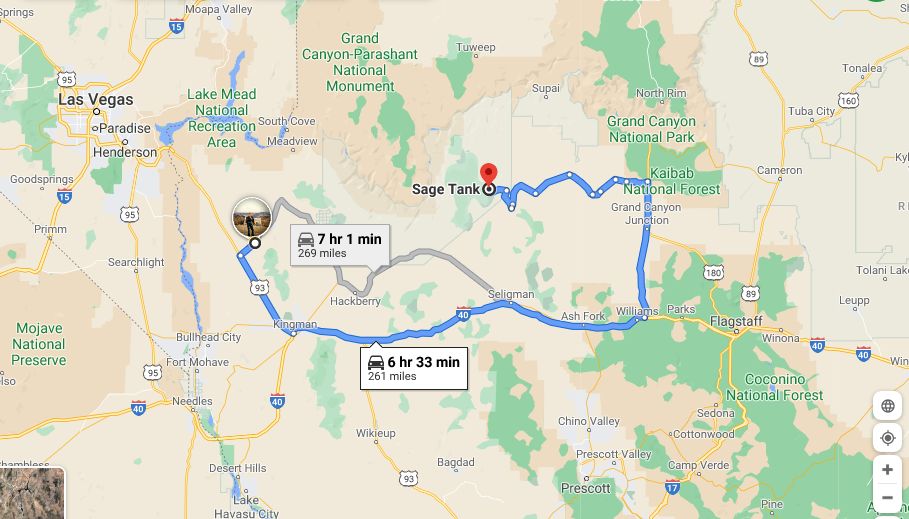
Map shows that the LMRFD CON requires our ambulance to respond all the way to Sage Tank in Coconino County. I don't when or how the LMRFD ambulance was given 2200 square miles to provide EMS services, but it needs to be reviewed and reduced to something more reasonable. 

As you can you can see you can't get there from here... It would take 6 1/2  hours for the ambulance to get from Dolan Springs to Sage Tank...


Friday, January 22, 2021

Keeping Lines of Communication Open CERT & Ham Radio

This article is from FEMA on CERT teams and communications...
July 2019 FEMA Article on Communications 
https://community.fema.gov/AP_Story?id=a0Wt00000093oYsEAI 

LINK to Article

Community Emergency Response Team (CERT) members know that communication during an emergency is vital. Don Lewis of the Alexandria Radio Club in Virginia wants CERTs around the country to know how amateur radios can help.

Amateur radios, also known as ham radios, are useful tools. Lewis, who is trained in CERT, explained that ham radios are more powerful than regular radios. They aren’t incredibly expensive, and they have a wide range of uses.

Sometimes CERTs may need to work together throughout a large area. They need to be able to report things that they have found. They sometimes even need to request medical support. Using a radio is easier, safer, and more efficient than sending a person back with messages, says Lewis. Ham radios enable a CERT to communicate over much greater distances than standard radios. This can improve the level at which a CERT can coordinate. CERTs already use ham radios in exercises and they have extended their range and effectiveness.

The City of Berkeley, California’s CERT has already begun using ham radios in city-wide disaster drills. In the winter of 2018, they held a 24-hour mock disaster where they practiced their ham radio skills to better prepare their city. They were able to maintain communications in the whole city for the entire 24-hour exercise. This allowed them to relay critical information to citizens and disaster crews. They were also able to use hams to aid the city during a blackout in November of 2017. The CERTs used solar powered batteries in their ham radios. This allowed them to function even when power and phones were down.

Ham radio instructions are also built into Pasadena, California’s emergency management system. The area experiences earthquakes several times a year. The quakes can destroy cell towers and phones lines in an instant. Ham radios can be a huge asset during a disaster like this, so Pasadena has a network of radio operators trained to take over communications at any time they need. They can contact hospitals or fire stations to better serve their community. Ham operators can even aide families in contacting one another once a disaster has passed.

Are you interested in learning how to operate a ham radio of your own to serve your community? Then the Amateur Radio Emergency Service (ARES) may be for you. They are a group of radio operators who volunteer for various disasters and public service events. They can provide guidance for training, equipment, licensing, and anything else that you may like to know about hams!

My NOTE
The ham license takes some dedication and study for the FCC test.
The General Mobile Radio License has no test. The FCC license costs $35 for 10 years and covers your immediate family too.  


Lake Mohave Fire Board Meeting January 21st 2021

 It looks like things are improving in the fire district. Several board members are going through a learning process being new to the board but are working hard for the district. 

The former chief left chief Bonnee a lot of problems. Thousands of dollars of district bills went unpaid, and equipment was neglected. Chief Bonnee is getting these problems fixed, but sadly it looks like repairs to the equipment are going to be costly.

An example is the chief's truck. Former chief Winn had never serviced the chiefs truck in over 50,000 miles. When checked there was a little over a quart of oil in the engine. Maintenance is important to keep the districts equipment in top condition to respond to emergencies. 

The chief recognized the hard work the four current volunteers with dinner and a gift card from DSCC. 

We have smart people with various skills, and the district needs to take advantage of those skills. Station 41 in Dolan Springs needs some doors added for safety and privacy. Volunteer John Lilly has experience in home improvement and offered to install the doors. 

We'll see how the volunteer program goes. There are so many people with skills the district could use. I hope the chief starts using the wealth of knowledge and skills local residents have.

I apologize I had to leave the meeting early for a Zoom meeting.


Monday, January 18, 2021

It's Your Responsibility to Know How to Care For Your Family in a Disaster

Many of my posts talk about the need for volunteers in the LMRFD, but that's about day to day operations for fire and ambulance calls.

Today I'm going to talk about how we can care for family friends & neighbors in those few days or weeks after a disaster.

Between the riots in our nations capital, foreign terrorist, domestic terrorist attacks, changes in weather, and recent earthquakes, the chance of a major event hitting are getting higher. 

Who would respond in a regional disaster? If our region had a major weather event or earthquake where roads are closed and normal communications are down, who would respond? 

The truth is nobody, nobody is going to respond if you or your family are injured in a major event, at least not for several days.

In any major event involving Kingman, Bullhead City, the Colorado River area, and Lake Havasu City, we would be on our own for days if not longer.

It's NOT the Lake Mohave Ranchos Fire Districts fault, it's not the county's fault, and it's not the states fault, it's our fault. We decided to live in a remote area where on a good day we have four firefighter covering fire protection and ambulance service for 2000+ square miles. 

We decided to live in an area with limited resources so it's our responsibility to know how to take care of our family, friends and neighbors in a disaster. 

Everyone Needs to Take CERT Training because what you know in a disaster may literally mean the difference between life and death.

It would be great if we had a CERT team with 50 volunteers between Dolan Springs and Meadview. CERT's basic first aid and rescue training would give us the ability to care for our family, friends, and neighbors, until professional rescuers can arrive.

A organized CERT team would be great, but if you take CERT Training there is no obligation to join or start a CERT team. Simply having local people trained in basic disaster response skills would be an advantage in any size emergency or disaster.

But there are a lot of IF's to getting CERT training approved... 

IF we can get the 20 or so people needed for a CERT training. IF a county agency will sponsor a CERT team here. IF Mohave County has the money, and IF Mohave County Emergency Management has the time. 

It doesn't take much to create a real life and death emergencies in Arizona. Especially in Meadview, several times in the last 8 years I've heard calls where the ambulance was unable to respond to a call in Meadview and tad to turn back because the washes on Pierce Ferry and Stockton Hill Road were both running too high and roads were closed.

No CERT training is planed at this time

We're just testing the water to see how much interest there is in the training 

CERT Training Info


Friday, January 15, 2021

LMRFD Technical Committee Needs Your Input

The LMRFD Technical Committee is working to improve the service provided to the citizens of the LMRFD. We need your ideas on what the fire district's needs should be, and how we can achieve and pay for those needs. 

We understand Dolan Springs and Meadview are different types of communities with different needs. Meadview is a compact community and Dolan Springs is spread out over miles. We need to understand those differences and how we can address the needs of each community. 

You can post ideas and comments here or as soon as we have an email address where you can send your ideas to the Technical Committee I will update this post..

It's YOUR fire district, let us know what you need....


Tuesday, January 12, 2021

LMRFD Technology Committee

 Well the first meeting of the LMRFD technology committee went well. A lot of good ideas were discussed and several committees formed to do research and bring back information that would then be passed on to the LMRFD board.

The technology committee is a good way for the board to get input and ideas from citizens with various backgrounds on how to help the fire district. 

The fire districts board of directors controls the money and hires the fire chief. It's the chief's job to run the fire district and the board has little to say about day to day operations. 

I hope there's some way for the technology committee to receive the knowledge and experience local people have, and for the chief to receive guidance or information from the technology committee without it interfering with the chief's ability to run the fire district's day to day operations.


Tuesday, January 5, 2021

I asked the Arizona Fire District Association if a Fire Chief needs to be a Paramedic... Here's what they said...

 Reply from the Arizona Fire District Association

AFDA Admin <admin@azfiredistricts.org>
Mon, Jan 4, 10:23 AM (19 hours ago)
to me
No, the Chief does not need to be a paramedic.
Best regards,
Kelly
Administrator
Arizona Fire District Association
PO Box 6778
Chandler, AZ 85246
P: 480-496-4331
F: 480-447-3303

Saturday, January 2, 2021

Bonne's Back and Lied to the Board AGAIN

Bonnee's back and he lied to the board AGAIN telling them for a second time that a fire chief must be a paramedic. 

This is NOT TRUE... Look it up! 

When someone wanting to be placed in a position of public trust provides false or misleading information in order to get that position, how can you trust anything else they say?
Since this was brought up online last time Bonnee was hired, why didn't someone on the board just grab they're phone and look this up rather than take his word?

The fire chief is an administrator, there is no law rule or regulation requiring a fire chief to be a paramedic. In fact most fire chief's in Arizona are not paramedics, they're administrators.

I'm afraid we may need to recall the newly elected LMRFD board. 

Saturday, December 19, 2020

What's the Fire Districts Liability for Elderly Firefighter in a Line of Duty Death?

 As far as I know none of the LMRFD volunteer have been given a physical exam. As a volunteer for NACFD like all their firefighters I was given a physical, two physicals in fact.

We have several volunteers who are over 60 years old. I think that's great to keep our older citizens involved in the community and using their knowledge and experience for the fire district is great. 

But what is the fire districts liability if a volunteer dies from a heart attack and it's judged to be a LODD (Line-of-Duty Death)

When a firefighter dies in the line of duty their family gets tens of thousands of dollars. That's great as these guys are heros and their family deserves help if something happens on the job.

But firefighters unlike law enforcement have a special clause that says an on-duty fatality is defined as an injury or illness sustained while on duty that proved fatal, including illness resulting from a sudden cardiac event or stroke within 24 hours of training or emergency response.

It seems only common sense to give volunteer firefighters a physical exam before they start. A 65 year old volunteer with a history of cardiac problems could show up for their first fire call or training session and have a heart attack and it would be a LODD.

Firefighters families are devastated when their loved one dies and they deserve the tens of thousands of dollars in benefits from various organizations. 

The LMRFD needs to be responsible and make sure volunteer firefighters are in reasonable physical condition before sending them on calls or attending training by giving them a physical exam. 

What liability does the fire district have if an elderly volunteer dies on a call or within 24 hours and we had no idea of an underlying condition?  


Friday, December 18, 2020

LMRFD Board Meeting Meadview December 17th

It looks like we finally have a board of directors who understand what the fire district needs and they are working on it. I need more information but it looks like things are going to change for the better. 

Thank you to the new board members.....

Wednesday, December 16, 2020

How To Use Local GMRS Repeaters in Dolan Springs and Las Vegas

GMRS is kind of informal compared to ham radio. You can use call signs and many do like "WRFS930 base to mobile" when I call my wife, Or I can just say " Jean got your radio on". You do need to give your call sign. The FCC rules say "(a) The GMRS station call sign must be transmitted: (1) Following a single transmission or a series of transmissions; and, (2) After 15 minutes and at least once every 15 minutes thereafter during a series of transmissions lasting more than 15 minutes"

There are a lot of GMRS repeaters in the Las Vegas area, around 15 or so last time I looked. Most are for local coverage like the one here in Dolan covering about 20-30 miles, but several like the Rat Repeater on 462.675. It sets high on Mt Potosi at 8750 feet. The link shows a map of the estimated coverage of the Rat Repeater and I can hit it with a handheld from 9th and Pierce Ferry Rd. 

This is the same frequency as my repeater but we use different tones, so don't be surprised if you hear people in Vegas talking when you're in Dolan.  

The Dolan Springs repeater covers from around milepost 32 to milepost 51 on US93. It's on 462.675+ 5 Mhz, that means you receive on 462.675 and transmits on 467.675, a 100.0 hz subaudible tone that's required to open the repeater.

The MyGMRS.com page has lots of information like this map of GMRS repeaters or the Repeater Directory where you can search for repeaters by state and shows a map of estimated coverage for the repeater. More on emergency service NETS and high tech stuff like internet linking of repeaters for regional or state coverage too.

Arizona GMRS Repeater Club Tucson AZ has lots of great info on GMRS repeaters, radios, and more... 

How to Get a GMRS License


Tuesday, December 15, 2020

First Responders Cows and Open Range Where an Accident Could Put the Ambulance Out of Service and the Crew Injured

 We all know how dangerous driving here in Arizona is with our free range cows, especially at night. People from other areas and think letting cows run around in nuts. 

But in Washington, Idaho, and Montana we had a different problem, herds of deer, elk, and bison on the road. In Montana we would have several hit on any weekend. In Washington I've been hit by more deer than I've hit. Scares the hell out of you, bam and you get broadsided by a deer. 

FYI more people are killed trying to avoid a deer than hitting the deer. Bison, Moose, and Cows are bigger and can do significantly  more damage.... 


What if you have a life threatening medical emergency and the LMRFD ambulance hits a cow in route? This would increase the response time from minutes to hours, seriously injure the crew and damage our ambulance. With our long response times depending on the condition of the crew after an accident, it could be some time before anyone realized something was wrong. 

Today FLIR Forward-Looking Infrared devices are common and much less expensive than older units used by law enforcement and the military.

A unit like the FLIR PathfindIR II Object Detection System cost about one ambulance call $2500. This VIDEO of the Pathfinder FLIR System shows the importance of FLIR in a rural ambulance like ours where being involved in an accident putting the ambulance out of survice and injuring firefighters is not acceptable 


Tuesday, December 8, 2020

Why the LMRFD Needs a Fire Chief Who Lives Here...

There are a number of reasons we need a fire chief who lives in the fire district. 

First in a major disaster where roads are damaged or closed there's a 2 out of 3 chance the chief will be in kingman with his family.

Secondly it takes too long for him to respond on emergencies. Like with the fire at 6am this morning it took the chief 45 minutes or so to get to the fire in Dolan. 

We know a structure fire can double in size every 30 seconds especially when it's a mobile home like this morning. So it's pretty much all over and done by the time the chief gets there.

Third we need a chief who will communicate with any resident who has a question or problem. He shouldn't ignore questions or comments and especially not ignore those who literally spent hours filling out the volunteer application. 

This is our fire district yet it's being ran by people who are not stakeholders here. They don't live here, don't own property here, and some don't even need to show up to work here. Their family is safe in areas with far more resources that the LMRFD. 

Friday, December 4, 2020

Software Defined Radios Make Great $20 Receivers for Fire, Sheriff, DPS, or Anything Else...

 Software Defined Radios are the latest thing in radio scanners, receivers and transceivers.  For $20 to $50 on eBay you can have a cool receiver that covers all frequencies from 24 Mhz to 1766 Mhz. That's from just below CB frequencies to microwave frequencies. 

The interface is easy to use, plug it into a USB port, download the HDSDR software and enter the frequency you want to listen to, or record the radio traffic on the built in recorder.


This is the same type of receiver the government uses to find bugs, your signals, or anyone talking on pretty much any frequency.

Here you can see a number of signals being received. If you want to listen then just click on the signal in the upper part of the screen you're interested in listening to. 


You can select several types of signals, AM, FM, USB Upper Sideband, LSB Lower Sideband, CW Morse Code, and Digital signals.

Listening to scanner frequencies is fun, and can be very useful in knowing what's going on in rural areas like ours.. 

Have Fun.... 

Jay 

Ham call sign KA7MBQ 

GMRS call sign WQRS930


Thursday, December 3, 2020

LMRFD Needs to Embrace FirstNet for Communications

 The federal government built a special stand alone cellular network separate from what you or business customers use called FirstNet.

It was built for first responders and allows high power equipment with 5 times the power of your cell phone. 

BUT if we don't use FirstNet why would AT&T spend money to expand the network here? 

FirstNet: Reaching Rural and Remote Parts of America FirstNet is built for all public safety. That means every first responder in the country – career or volunteer; federal, tribal, state or local; urban, suburban or rural. And reaching rural and remote parts of America is one of our top priorities. Using all AT&T LTE bands and Band 14 spectrum, FirstNet currently covers more than 2.61 million square miles. In 2019 alone, we added more than 120,000 square miles of LTE coverage, which is roughly the size of New Mexico. To put it simply, we’ve been busy giving more first responders and the communities they serve access to the critical communications capabilities they need. But we aren’t stopping there. 

We’re actively extending the nationwide reach of FirstNet to give agencies large and small the reliable, unthrottled connectivity and modern communications tools they need. 

The LMRFD Needs to support FirstNet

Tuesday, November 17, 2020

HamShack Hotline the Ham Radio Operators Bat Phone for Emergency Communications

 HamShack Hotline is Free for Ham Operators 

Hamshack Hotline (HH) is a dedicated Voice-Over-Internet-Protocol (VOIP) network that is free to amateur radio operators around the world. The goal of the Hamshack Hotline is not to replace the traffic that is carried over RF, but rather augment it when conditions are diminished or otherwise busy. You’ll find phones in personal ham shacks, EOCs, club stations and mobile command posts. 

Communicate with other hams who operate in state and local Emergency Operations Centers EOC's....

I wonder if it would be possible to set up a Hotline like this for GMRS groups who emergency communications? 

Saturday, November 7, 2020

I Give Up, It's Been Two Months Since I Asked to Volunteer, Again...

Chief Winn obviously isn't interested in volunteers so I gave up and sent this email to the chief.

Jay Fleming leapspeaker@gmail.com

7:36 AM (2 hours ago)
to Chief
OK Chief I give up, you win. 
I'll wait until the next board member quits, should be soon. I'll serve my community by applying for the next board opening.

Jay Fleming

I contacted Chief Winn about volunteering on September 3rd 


I had a meeting with Chief Winn about coming back as a volunteer on September 15th. 


A week Later on September 22nd I sent the chief an email to see what was going on about volunteering. 

No Answer from the chief


Another week Later on September 29th I sent Chief Winn another email saying I hadn't received a reply from him. 

No Answer from the chief


October 4th I had not received any response from the chief.


On October 5th Chief Winn finally replied saying "I just got back from vacation and he hoped we would meet the week of October 5th BUT No Contact from the chief


12 days later on October 24th I sent Chief Winn an another email saying "It's been a month and a half since we met any decision yet?"


Today is November 7th it's been over two months since I first contacted Chief Winn about volunteering and still NOTHING from the chief. 


I sent the chief this email November 7th 2020

Jay Fleming leapspeaker@gmail.com

7:36 AM (2 hours ago)
to Chief
OK Chief I give up, you win. 
I'll wait until the next board member quits, should be soon. I'll serve my community by applying for the next board opening.

Jay Fleming

I haven't wanted on the fire board because then I can't use my knowledge and experience as a volunteer. So the next board opening I'll apply for the opening and use my training and experience in fire fighting and EMS to hire a fire chief who lives in the fire district and understands without communications and volunteers we have nothing in a major disaster. 

Monday, November 2, 2020

Emergency Communications 101

Emergency Communications 101 

This is from BearCom Communications a two-way radio dealer

If you use a two-way radio (walkie-talkie) on the job, you need to know what to do in an emergency. This is especially true if you’re far from a landline telephone and dialing 911 is out of the question. 

Public safety, police, firefighters, EMTs and emergency-response professionals know the essentials of two-way radio use because it’s so central to their work. Radio users in industries such as construction, hospitality, education, event planning, and other sectors deal with far fewer emergencies, so they need to set aside extra time to learn or refresh themselves on the right thing to do in a crisis.   

Five Two-Way Radio Best Practices for Emergencies

A lot of things have to be done right when using two-way radios in an emergency. Some of these tips may seem like common sense, but common sense often flies out the window amid the stress, anxiety and chaos of a crisis. Be sure you know these five points in advance:

1.    You must be prepared. If you are unfamiliar with two-way radios, take some time to learn how they function and what features your device offers (such as emergency alerts). When you’re getting trained on a new radio, insist on asking what you would do differently in an emergency.

2.    When talking, less is more. Be brief and efficient — know what you are going to say before talking into the microphone; otherwise you’ll tie up the channel while thinking of what to say. (Remember: When you use the push-to-talk button, you’re preventing other people from talking on the same frequency). NOTE: Many digital MOTOTRBO models from Motorola Solutions enable texting if Push-to-Talk is not practical or possible.

3.    Don’t mind your manners. While you must respect fellow users, you don’t have to be polite by saying “please” or “thank you.”

4.    Repetition rocks. Repeat back information you receive to confirm that you heard correctly.

5.    You have no privacy. Remember that group conversations are not private on open channels — any other radio user within range can hear what you’re saying by tuning to your frequency. Actually, this is a big plus in emergency broadcasts and SOS situations where the operator wants to relay a message to as many people as possible.

Cell Phones Aren’t the Answer in an Emergency

The Columbine school shooting in 1999 marked one of the first times where easy access to cell phones played a role in a major emergency. Unfortunately, students could call newscasters, but could not convey accurate information, creating conflicting reports that confused first responders. And 911 dispatchers were flooded with calls, which did more harm than good.

Fourteen years later at the Boston Marathon bombing, cellular networks either slowed dramatically or intermittently stopped working altogether. Runners and their loved ones could not connect, and victims had trouble communicating with emergency responders. That frustrating scene of over-strained cellular networks has become familiar in such disasters as the September 11 attacks and Hurricane Sandy.

For all the reliance we place on cell phones, they have failed repeatedly when needed most. In almost every instance, congestion is the problem. Too many people try to use their phones at the same time to get help or tell family and friends they are okay.

Two-way radios excel where cell phones fall short because they have dedicated bandwidth and a limited number of users. They’re also much easier to use — usually it’s not much more than pushing one button and talking. With the addition of bi-directional amplifiers, distributed antenna systems, and repeaters, reliable two-way radio coverage can be extended throughout a facility or across a campus in areas where cell phone signals cannot reach.

Two-Way Radio Groups Help People Prepare and Stay Informed

Organizations are putting a priority on two-way radios for emergency communications. For example, the Times of India reported that a monsoon flooding disaster in the northern Indian state of Uttarakhand prompted officials in other flood-prone regions to establish amateur radio facilities to provide emergency communication. Also, the American Radio Relay League hosts its national Field Day so amateur radio clubs across the U.S. can get together to test their radio equipment and practice emergency communication strategies.

Communication is Essential During a Crisis

With a little planning and preparation, two-way radios can help manage an appropriate emergency response, interface with first responders and save lives.